



DNA/RNA Synthesis
RNA synthesis, which is also called DNA transcription, is a highly selective process. Transcription by RNA polymerase II extends beyond RNA synthesis, towards a more active role in mRNA maturation, surveillance and export to the cytoplasm.
Single-strand breaks are repaired by DNA ligase using the complementary strand of the double helix as a template, with DNA ligase creating the final phosphodiester bond to fully repair the DNA.DNA ligases discriminate against substrates containing RNA strands or mismatched base pairs at positions near the ends of the nickedDNA. Bleomycin (BLM) exerts its genotoxicity by generating free radicals, whichattack C-4′ in the deoxyribose backbone of DNA, leading to opening of the ribose ring and strand breakage; it is an S-independentradiomimetic agent that causes double-strand breaks in DNA.
First strand cDNA is synthesized using random hexamer primers and M-MuLV Reverse Transcriptase (RNase H). Second strand cDNA synthesis is subsequently performed using DNA Polymerase I and RNase H. The remaining overhangs are converted into blunt ends using exonuclease/polymerase activity. After adenylation of the 3′ ends of DNA fragments, NEBNext Adaptor with hairpin loop structure is ligated to prepare the samples for hybridization. Cell cycle and DNA replication are the top two pathways regulated by BET bromodomain inhibition. Cycloheximide blocks the translation of mRNA to protein.
DNA/RNA Synthesis Isoform Specific Products
All Product Categories
-
DNA/RNA Synthesis Inhibitors
(1444)
View all products
-
DNA/RNA Synthesis Agonists
(11)
View all products
-
DNA/RNA Synthesis Antagonists
(2)
View all products
-
DNA/RNA Synthesis Activators
(43)
View all products
-
DNA/RNA Synthesis Modulators
(34)
View all products
-
DNA/RNA Synthesis Chemicals
(20)
View all products
-
DNA/RNA Synthesis Inducers
(15)
View all products
-
DNA/RNA Synthesis Degraders
(4)
View all products
-
DNA/RNA Synthesis Controls
(5)
View all products
-
DNA/RNA Synthesis Substrates
(6)
View all products
-
DNA/RNA Synthesis Ligands
(5)
View all products
-
DNA/RNA Synthesis Related Products (2889)
Related Products (2889)

-
Antibodies (248)
-
DNA/RNA Synthesis Isoform Comparison
-
Poly(A) polymerase
 0 ImagesPoly(A) polymerase catalyzes the incorporation of ATP into the RNA 3' end in the form of AMP, that is, adding a polyadenosine tail at the RNA 3' end. Poly(A) polymerase increases RNA stability and increases mRNA translation efficiency in eukaryotic cells. Poly(A) polymerase has high tailing efficiency and can add 20-200 A bases to the 3' end of RNA.
-
Mequindox
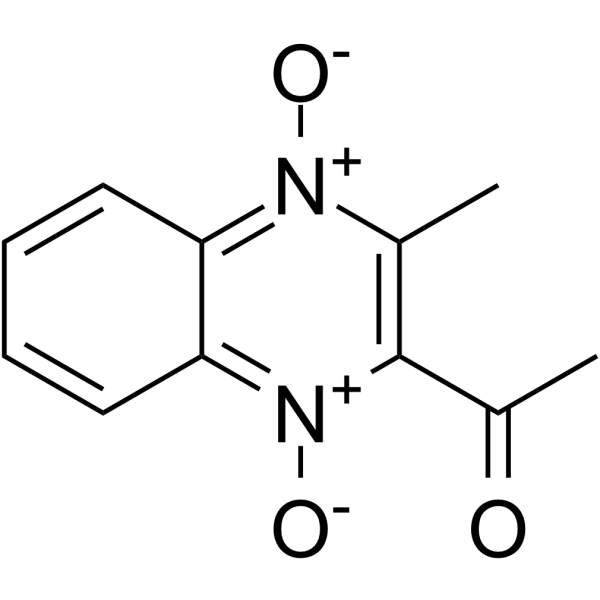 0 ImagesMequindox is an antimicrobial agent. Mequindox acts as an inhibitor of DNA synthesis. Mequindox induces genotoxicity and carcinogenicity in mice.
-
Uridine triphosphate-d13 dilithium
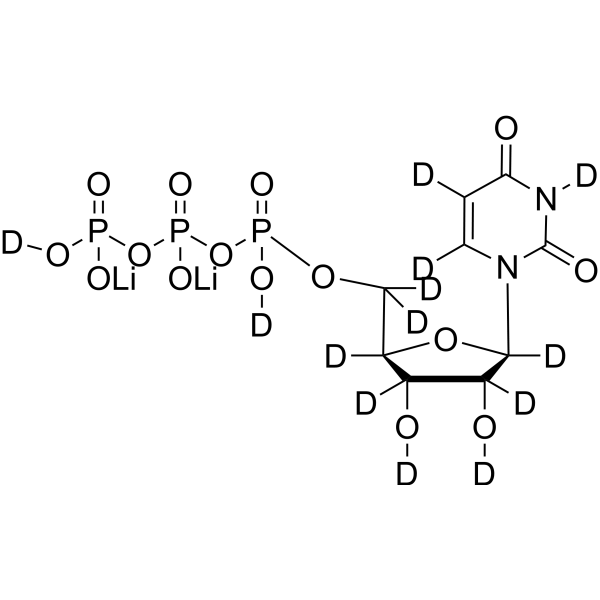 0 ImagesCat. No.: HY-107372S3Purity: 99.6%Synonyms: UTP-d13 dilithium; Uridine 5'-triphosphate-d13 dilithiumUridine triphosphate-d13 (UTP-d13 dilithium; Uridine 5'-triphosphate-d13) dilithium is deuterium labeled Uridine triphosphate (HY-107372). Uridine triphosphate (UTP;Uridine 5'-triphosphate) is a nucleotide that regulates the functions of the pancreas in endocrine and exocrine secretion, proliferation, channels, transporters, and intracellular signaling under normal and disease states.
-
Guanosine triphosphate-13C10,15N5 tetraammonium solution (100 mM)
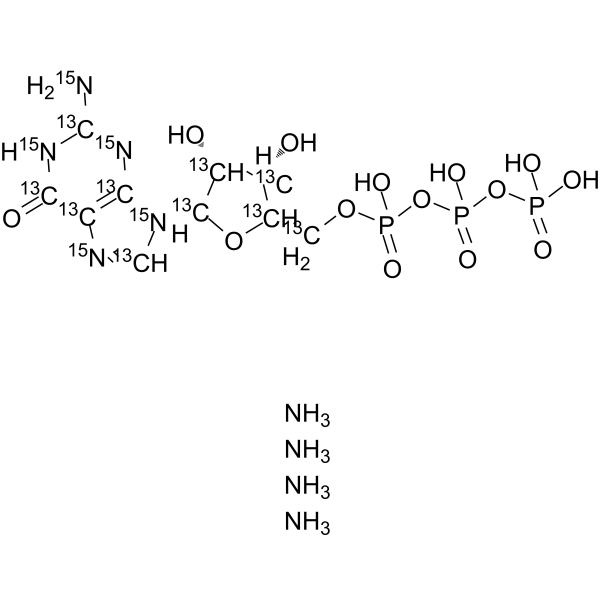 0 ImagesCat. No.: HY-113225S1Purity: 99.98%Synonyms: GTP-13C10,15N5 tetraammoniumGuanosine triphosphate-13C10,15N5 tetraammonium is the 13C and 15N labeled Guanosine triphosphate tetraammonium. Guanosine triphosphate tetraammonium (GTP) is a critical nucleotide and regulator of cellular metabolism. Guanosine triphosphate tetraammonium promotes ribosomal DNA localization, pre-rRNA transcription and ribosome biogenesis by binding to RNA polymerase I and GPN proteins (GPN1/3). Guanosine triphosphate tetraammonium links MYC-dependent ribosome biogenesis to nucleotide sufficiency, acts as a metabolic gatekeeper supporting protein synthesis, DNA/RNA synthesis and cellular signal transduction, while also participating in the physiological activities of pancreatic β-cells and serving as an oxidative substrate for reactive oxygen species. In small cell lung cancer with high MYC expression, Guanosine triphosphate tetraammonium accumulates through the IMPDH-driven synthetic pathway, thereby affecting apoptosis and mitotic processes. Guanosine triphosphate tetraammonium is used in the research of small cell lung cancer, hepatoblastoma and cellular metabolism.
-
Levofloxacin hydrate (Standard)
 0 ImagesSynonyms: Levofloxacin hemihydrate (Standard)Levofloxacin (hydrate) (Standard) is the analytical standard of Levofloxacin (hydrate). This product is intended for research and analytical applications. Levofloxacin hydrate (Levofloxacin hemihydrate) is an orally active antibiotic and is active against both Gram-positive and Gram-negative bacteria. Levofloxacin hydrate inhibits the DNA gyrase and topoisomerase IV. Levofloxacin hydrate can be used for chronic periodontitis, airway inflammation and BK Viremia research. Levofloxacin hydrate shows anti-orthopoxvirus activity.
-
DMTr-LNA-5MeU-3-CED-phosphoramidite
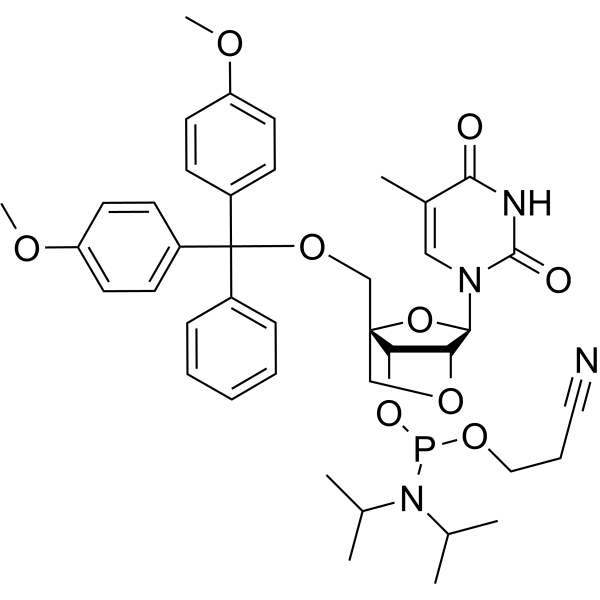 0 ImagesDMTr-LNA-5MeU-3-CED-phosphoramidite is a Phosphoramidite derivative and Nucleoside derivative.
-
wrwyar-NH2 TFA
 0 ImagesCat. No.: HY-P10930Purity: 99.41%wrwyar-NH2 (TFA) is a control peptide for wrwycr-NH2 (HY-P10930A).
-
NSAH
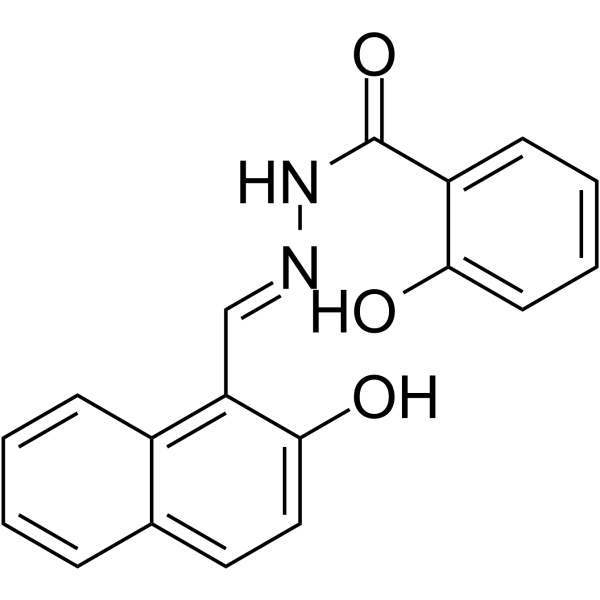 0 ImagesNSAH is a reversible and competitive nonnucleoside ribonucleotide reductase (RR) inhibitor, with cell-free IC50 of 32 μM and cell-based IC50 of ~250 nM, respectively.
-
GHP-88310
 0 ImagesCat. No.: HY-180882Synonyms: EIDD-3608GHP-88310 is an orally active broad-spectrum paramyxovirus and orthomyxovirus inhibitor that targets the L protein-RdRP complex, and exhibits activity against respiratory viruses and viruses of the genus Morbillivirus. GHP-88310 binds to the central cavity of the polymerase protein, blocks replicase and transcriptase activities, interferes with the viral life cycle and inhibits viral replication. GHP-88310 can be used in studies of paramyxovirus infections, including morbillivirus-like diseases, human parainfluenza virus type 3 infection and measles.
-
FITC-labeled Drisapersen sodium
 0 ImagesCat. No.: HY-150237FITC-labeled Drisapersen (sodium) is Drisapersen labeled with FITC. Drisapersen, a antisense oligonucleotide, induces exon 51 skipping during dystrophin pre-mRNA splicing and allows synthesis of partially functional dystrophin in Duchenne muscular dystrophy (DMD) patients with amenable mutations.
-
5'-O-DMT-N4-Bz-5-Me-dC
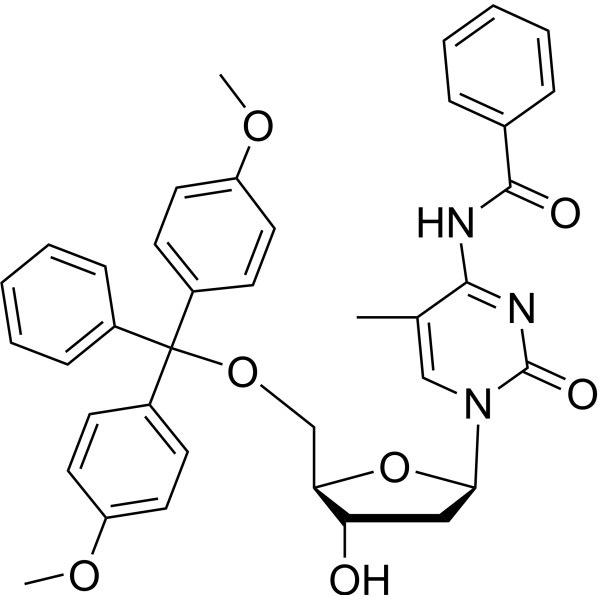 0 ImagesCat. No.: HY-138601CAS No.: 104579-03-55'-O-DMT-N4-Bz-5-Me-dC is a modified nucleoside. 5'-O-DMT-2'-O-TBDMS-rI can be used in the synthesis of deoxyribonucleic acid or nucleic acid.
-
Coptisine
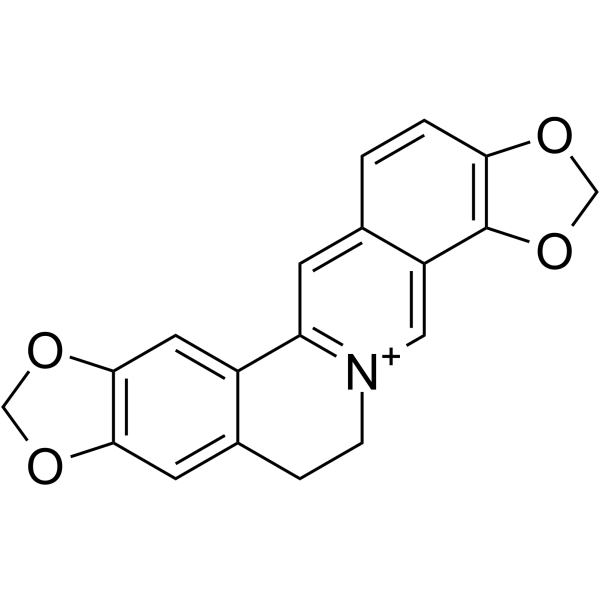 0 ImagesCoptisine is an orally active and brain-penetrant alkaloid found in Coptis chinensis. Coptisine is a reversible, uncompetitive IDO inhibitor with a Ki of 5.8 μM and an IC50 of 6.3 μM. Coptisine suppresses neuroinflammation, reduces Aβ plaque burden and shows neuroprotective activity. Coptisine shows anti-inflammation activity by blocking NF-κB, MAPK, and PI3K/Akt activation. Coptisine inhibits cancer cells proliferation, induces DNA damage, G2/M phase cell cycle arrest, apoptosis, ROS production and mitochondrial dysfunction. Coptisine inhibits Rho/ROCK pathway activation, reduces arrhythmia, limits cardiac injury marker release, reduces infarct size, and preserves cardiac function in rat myocardial ischemia/reperfusion models. Coptisine downregulates HMGCR and upregulates LDLR and CYP7A1 to modulate cholesterol metabolism, reduces abnormal serum lipid levels, and promotes fecal bile acid excretion. Coptisine can be used for the research of cancer, hypercholesterolemia, Alzheimer’s disease, inflammatory disorders and cardiovascular disease.
-
AZT triphosphate
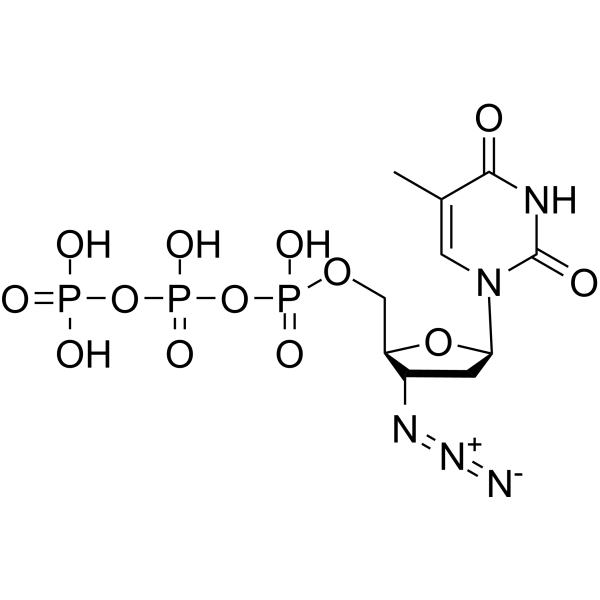 0 ImagesCat. No.: HY-116364CAS No.: 92586-35-1Synonyms: 3'-Azido-3'-deoxythymidine-5'-triphosphateAZT triphosphate (3'-Azido-3'-deoxythymidine-5'-triphosphate) is a active triphosphate metabolite of Zidovudine (AZT). AZT triphosphate exhibits antiretroviral activity and inhibits replication of HIV. AZT triphosphate also inhibits the DNA polymerase of HBV. AZT triphosphate activates the mitochondria-mediated apoptosis pathway.
-
TDP-43 degrader-1
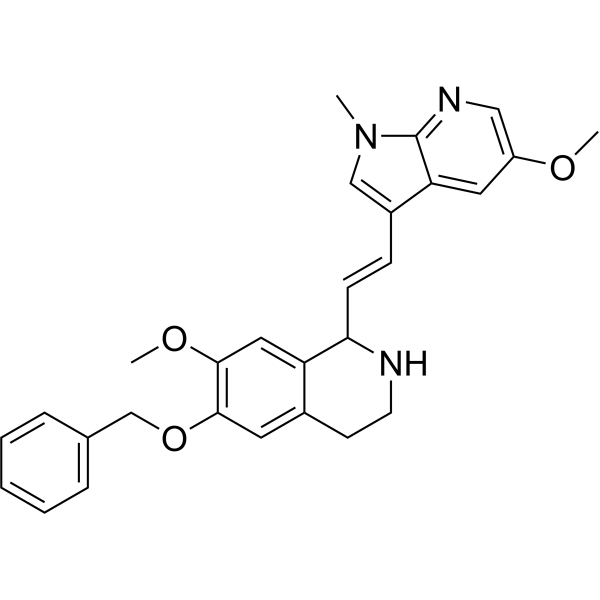 0 ImagesTDP-43 degrader-1 (Compound example 7) is a TDP-43 degrader. TDP-43 degrader-1 reduces the aggregation of TDP-43-positive HuR stress granules in cells and promotes the relocalization of abnormally distributed TDP-43 in the cytoplasm to the nucleus. TDP-43 degrader-1 can be used in the study of amyotrophic lateral sclerosis and Alzheimer's disease.
-
NERx 329
 0 ImagesNERx 329 is a replication protein A (RPA) inhibitor with an IC50 of 4.9 μM. NERx 329 blocks the interaction between RPA and single-stranded DNA, and induces functional RPA depletion, loss of single-stranded DNA gap protection, chromosome fragmentation and cell death. NERx 329 inhibits the DNA damage response signaling pathway, exhibits broad single-agent anticancer activity, and enhances the activity of DNA-damaging agents. NERx 329 can be used in research related to brca1-deficient breast cancer, non-small cell lung cancer, and brca1-deficient ovarian cancer.
-
N6-Methyl-dA phosphoramidite
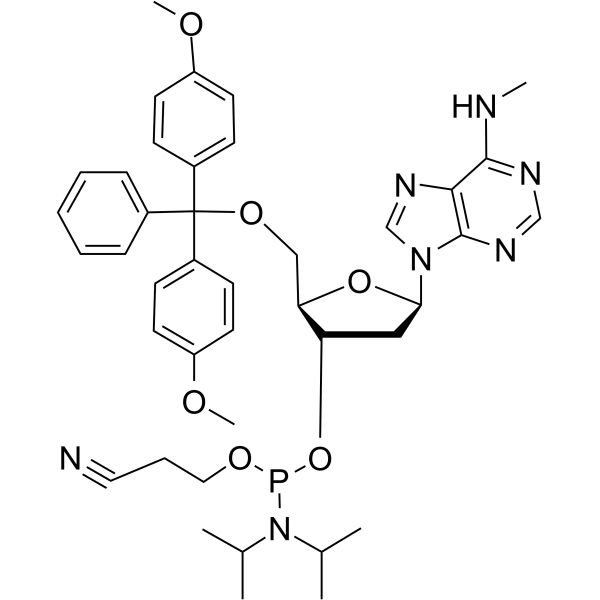 0 ImagesN6-Methyl-dA phosphoramidite can be used in the synthesis of oligodeoxyribonucleotides.
-
Cytidine-5'-triphosphate-15N3 dilithium
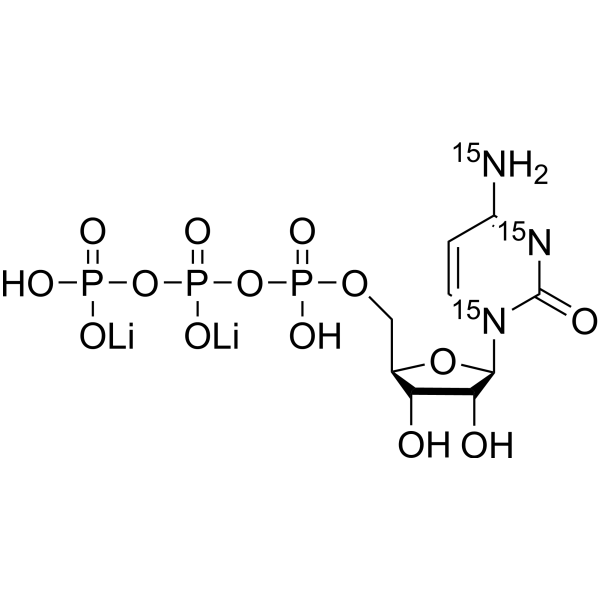 0 ImagesCat. No.: HY-125818S6Synonyms: Cytidine triphosphate-15N3 dilithium; 5'-CTP-15N3 dilithiumCytidine-5'-triphosphate-15N3 (Cytidine triphosphate-15N3 dilithium; 5'-CTP-15N3) dilithium is 15N labeled Cytidine-5'-triphosphate (HY-125818). Cytidine 5′-triphosphate (Cytidine triphosphate; 5'-CTP) is a nucleoside triphosphate and serves as a building block for nucleotides and nucleic acids, lipid biosynthesis. Cytidine triphosphate synthase can catalyze the formation of cytidine 5′-triphosphate from uridine 5′-triphosphate (UTP). Cytidine 5′-triphosphate is an essential biomolecule in the de novo pyrimidine biosynthetic pathway in T. gondii.
-
L-Asparagine-13C4,15N2,d8
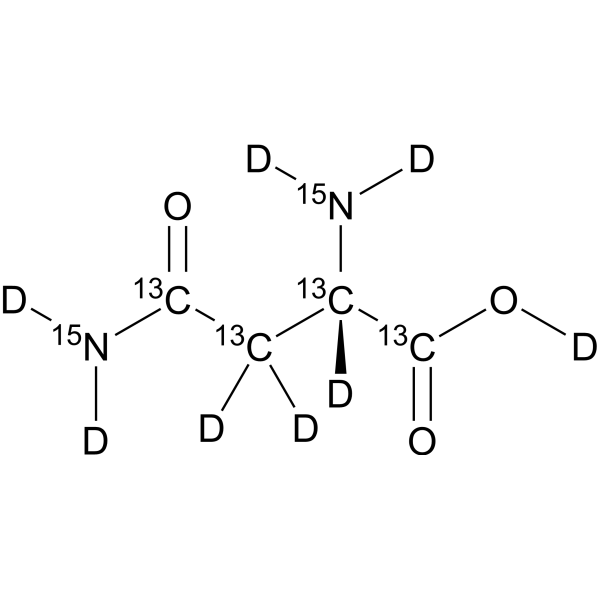 0 ImagesL-Asparagine-13C4,15N2,d8 is the 13C-labeled and 15N-labeled L-Asparagine (HY-N0667). L-Asparagine is an essential amino acid for leukemic cells and a substrate for L-Asparaginase. L-Asparaginase is a potent anti-leukemic enzyme that promotes asparagine (Asn) and glutamine (Gln) depletion and inhibits protein biosynthesis in lymphoblasts. Removal of L-asparagine from plasma by L-Asparaginase results in inhibition of RNA and DNA synthesis and subsequent apoptosis. L-Asparaginase has cell-killing ability in vitro and in vivo, and selectively inhibits the growth of cancer cells with low asparagine synthetase (AASNS) expression. L-Asparagine can be used as a biomarker and sensor for the study of childhood acute lymphoblastic leukemia.
-
CGP-53353
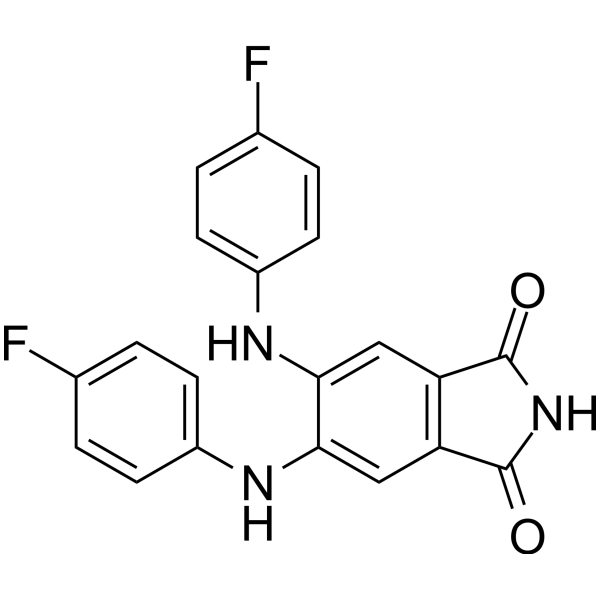 0 ImagesSynonyms: DAPH-7CGP-53353 (DAPH-7) is an potent PKC inhibitor with IC50s of 0.41 μM and 3.8 μM for PKCβII and PKCβI, respectively. CGP-53353 can inhibit glucose-induced cell proliferation and DNA synthesis in AoSMC and A10 cells. CGP-53353 can be used for researching atherosclerosis of diabetic patients.




